Dubai workshop begins shaping the next FTP cycle, with Big Three fixtures largely set and the WTC format up for a rethink
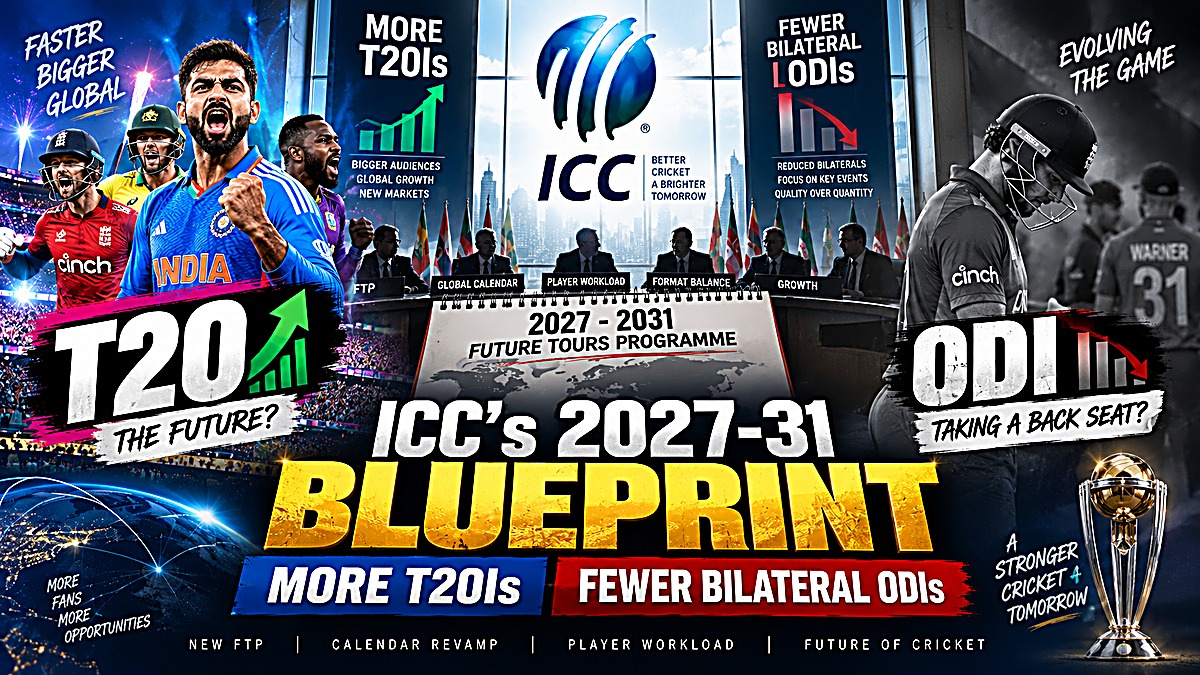
<cite index="1-1">The ICC will get together in Dubai this week for a workshop in which the next Future Tours Programme (FTP) looms large, with members trying to put a shape to the next international cricket calendar cycle from 2027 to 2031.</cite> <cite index="1-2">Starting on Tuesday, the ICC will conduct a cricket operations workshop, which will feature discussions on the FTP, the current cycle of which ends in March 2027.</cite> It's a two-day sit-down, and while nobody expects a finished document by the time delegates fly home, the broad shape of the next four years is coming into focus.
<cite index="1-3">Officials have cautioned that the meetings won't produce a final and comprehensive FTP just yet, with one insider describing the process as still having "so many moving parts."</cite> Even so, plenty of each member's main commitments should be largely finalised by the time discussions wrap up.
The headline shift is a familiar one dressed in fresh urgency: bilateral fifty-over cricket looks set to lose ground to the shorter format. With ICC events already eating into a crowded calendar, boards are leaning towards trimming stand-alone ODI series in favour of more T20Is between Full Members — a format broadcasters find easier to sell.
That squeeze is visible in how packed the ICC's own events list has become. <cite index="5-3,5-4">Australia and New Zealand will co-host the 2028 T20 World Cup, while India are set to stage the 2029 Champions Trophy</cite>, and <cite index="5-5">England, Scotland and Ireland will share the 2030 T20 World Cup, with India and Bangladesh confirmed as joint hosts of the tournament that follows.</cite> <cite index="5-1,5-2">A scheduling workshop bringing together operations teams from every member board has been fixed for these two days in Dubai, with eight Associate nations also invited to attend.</cite>
India, Australia and England are understood to have had the bulk of their marquee bilateral commitments effectively pencilled in already, leaving the workshop to settle finer detail for everyone else. <cite index="3-1">South Africa are expected to host India shortly after the 2027 ICC ODI World Cup, which South Africa will stage jointly with Zimbabwe and Namibia between October and November that year.</cite>
Pakistan's situation remains trickiest. <cite index="3-2">With bilateral cricket against India off the table, the Pakistan Cricket Board has been pushing for extra fixtures against England and Australia</cite>, and <cite index="3-3">a five-match ODI series against England has already been locked in for next summer.</cite> Expect more such patchwork arrangements to fill the gap left by the India-Pakistan freeze.
The BCCI has meanwhile pushed its own agenda — building rest and acclimatisation windows, including warm-up fixtures, into tours of the traditionally tough SENA nations.
ICC officials and board representatives are meeting in Dubai for a two-day cricket operations workshop to shape the next Future Tours Programme, covering the 2027-31 cycle, though a final comprehensive document is not expected to emerge immediately.
With ICC events like the T20 World Cup, Champions Trophy and ODI World Cup already crowding the calendar, boards are prioritising bilateral T20Is between Full Members over stand-alone ODI series to fit everything in.
Reports suggest the ICC is leaning towards a single 12-team division from 2027 rather than a two-tier system, potentially including Zimbabwe, Afghanistan and Ireland alongside the current nine full members.
With bilateral cricket against India off the table, Pakistan has pushed for more fixtures against England and Australia, and has already locked in a five-match ODI series against England for next summer.
The workshop isn't only about limited-overs scheduling. The World Test Championship's structure remains contentious. A working group led by former New Zealand batter Roger Twose explored a two-tier system that <cite index="4-1">failed to generate sufficient backing among members</cite>. The more likely outcome, reports suggest, is a straightforward expansion with <cite index="6-1">all 12 full member nations competing in one division from the 2027 cycle</cite>, rather than splitting the pool into separate leagues. <cite index="2-1">An ICC working committee presentation earlier this year had already recommended folding Zimbabwe, Afghanistan and Ireland into the championship, alongside allowing one-off Test series to count towards the league table.</cite>
A revival of the old ODI Super League points system is also said to be back on the table, a way of giving fifty-over cricket some context even as its volume shrinks. Alongside the calendar talks, <cite index="2-2">the ICC's DRS accreditation programme is also scheduled for discussion at the Dubai meeting.</cite>
None of this is final, but the direction is unmistakable: fewer meaningless bilateral ODI series, a heavier T20I diet for Full Members outside ICC events, and a Test structure edging away from an elitist two-tier model. For fans it likely means less clutter in the fifty-over calendar and sharper context elsewhere — a shift that dovetails with how sides across the board, India included, have increasingly leaned on T20I depth to win series. The final FTP isn't expected for a while yet, but the framework taking shape in Dubai this week will define international cricket well into the next decade.